The Night the Robots Enforced Bedtime
Reading is wonderful.
Sleep is also wonderful.
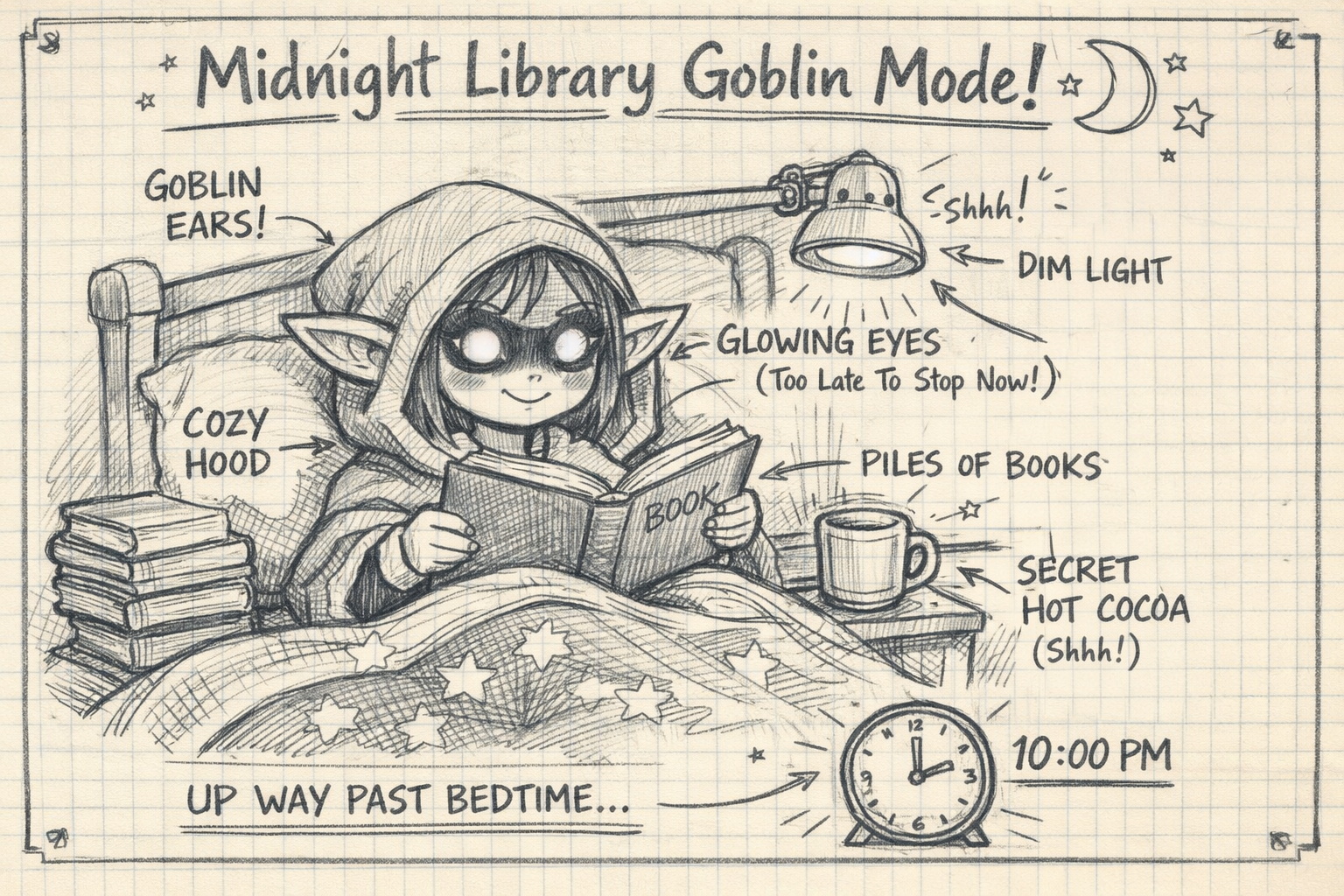
Unfortunately, my kids recently decided that reading is apparently more wonderful than sleep, and bedtime at 8 PM slowly started turning into… 9:30… 10:00… “just one more chapter, Dad.”
So naturally, I did the only reasonable thing:
I built a robot to enforce bedtime.
The Problem
We have two dedicated reading lamps — one for each girl. The rule is simple:
- Bedtime is 8 PM
- Reading is allowed for a bit
- But not until “midnight library goblin mode” is activated
One night I found both of them still reading at 10 PM.
Reading is great, but over-tired kids the next morning are not.
The Solution: A Gentle Robotic Nudge
Instead of yelling, reminding, negotiating, or threatening…
I automated it.
Here’s what the system does:
- At 9:00 PM (on school nights):
- If the lamps are still on → they flash off and back on 3 tmes
- A gentle, unmissable warning
- Five minutes later:
- The lamps fade off automatically
No yelling. No surprise darkness. Just the quiet understanding that the system has spoken.
The Hardware (Because of Course I Rebuilt the Lamps)
These didn’t start out as smart lamps.
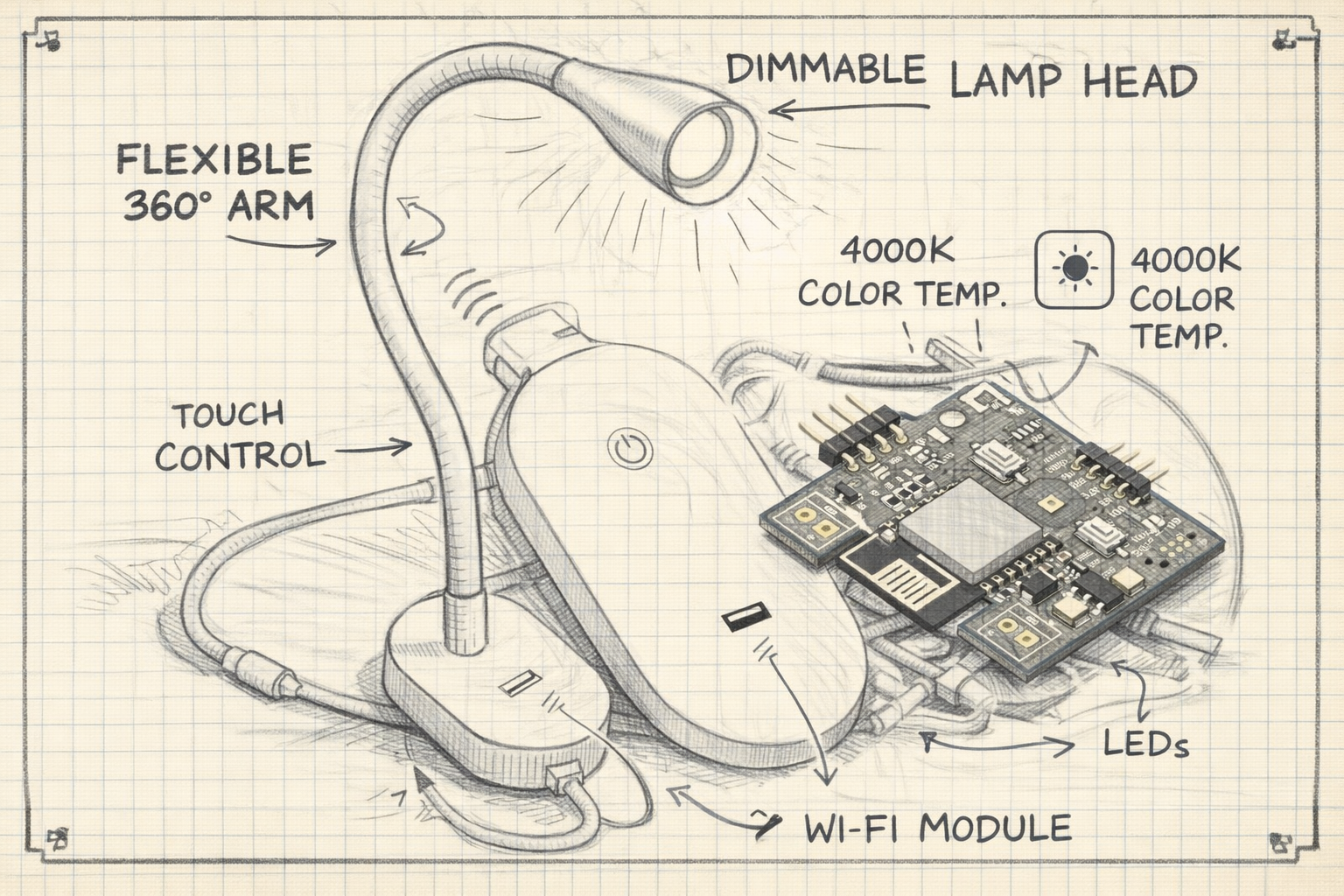
They were just normal touch-controlled 12V DC bedside lamps — tap to turn on, brightness levels, even a built-in USB charging port. Totally fine for normal people.
But I couldn’t leave well enough alone.
So I:
- Removed the stock controller
- Designed a custom ESP8266 (ESP-12E) control PCB
- Added a BSS138 MOSFET DC dimmer stage
- Regulated power with an AMS1117-3.3
- Kept physical input via a TTP223 capacitive touch sensor
- And flashed everything with ESPHome
Same lamp on the outside.
Entirely new personality on the inside.
One Important Tradeoff: The USB Port
The original lamp had a built-in USB charging port. After the retrofit That USB port no longer functions.
Supporting a protected, current-limited 5V USB output properly was intentionally left out of scope to keep the board simple and safe.
If someone really wants USB back, the clean solution is:
- Add a dedicated 12V → 5V buck converter
- Remove the USB connector from the buck module itself if it has one.
- Then solder the lamp’s original USB jack wiring to those pads
Example module: https://a.co/d/jlBtOT4
Salvaging Parts (Bonus Maker Credit)
A few important pieces from the original lamp get re-used:
- The spring contact that connects the PCB to the outer plastic touch surface
- Optionally:
- The BSS138 MOSFET
- The 22pF capacitor that decouples the touch spring
- The reverse-polarity protection diode
It keeps parts count down and keeps e-waste out of the bin.
The Loophole (Immediately Discovered)
When I explained how the automation worked, my 10-year-old immediately asked:
“And it doesn’t turn back on after that… right?”
Which told me two things:
- I respect her engineering instincts immensely.
- I absolutely will need a lockout automation someday.
But for now, there is no enforcement automation. No lockout, no override, and no forced fade-back-off. Just the robot reminding them… and a whole lot of trust.
The Parenting Layer: Trust First
Before enabling any kind of hard enforcement, I asked:
“Can I trust you?”
She said yes. So right now, the system is running on pure honor system. No enforcement.
The lamps warn and they fade off, but if someone really wanted to turn it back on, they absolutely could.
But the lockout automation is absolutely sitting in my back pocket… waiting quietly… like a firmware update.
Weekend Freedom
The automation is disabled on Fridays and Saturdays.
On weekends they can:
- Read as long as they want
- Stay up late (but in bed)
- Become full book-powered goblins
Structure during the week. Freedom on the weekend. No arguments. No negotiation. Just rules the robot keeps.
Bonus Feature: Gentle Morning Wake‑Up
A nice side effect of converting these into fully controllable smart lamps is that I can now automate how the girls wake up, too.
Instead of an abrupt alarm, the lamp can:
- Start at the lowest dimming level in the morning
- Then very slowly ramp up over about 10 minutes
It’s a much calmer way to wake up — honestly slightly better than an alarm clock, and the same way Steph and I have been waking up for a long time now.
Nighttime discipline and gentle mornings, powered by the same little robot.
The Code & Hardware Are Open
Because this project turned into something genuinely useful, I published:
- ✅ The ESPHome firmware
- ✅ The KiCad hardware design
- ✅ The OSH Park PCB link
- ✅ Full documentation
You can find everything here:
👉 https://github.com/Indemnity83/lamp-control
If you want to build one, modify one, or just laugh at the fact that I automated bedtime with custom PCBs… it’s all there.
Final Verdict
I used:
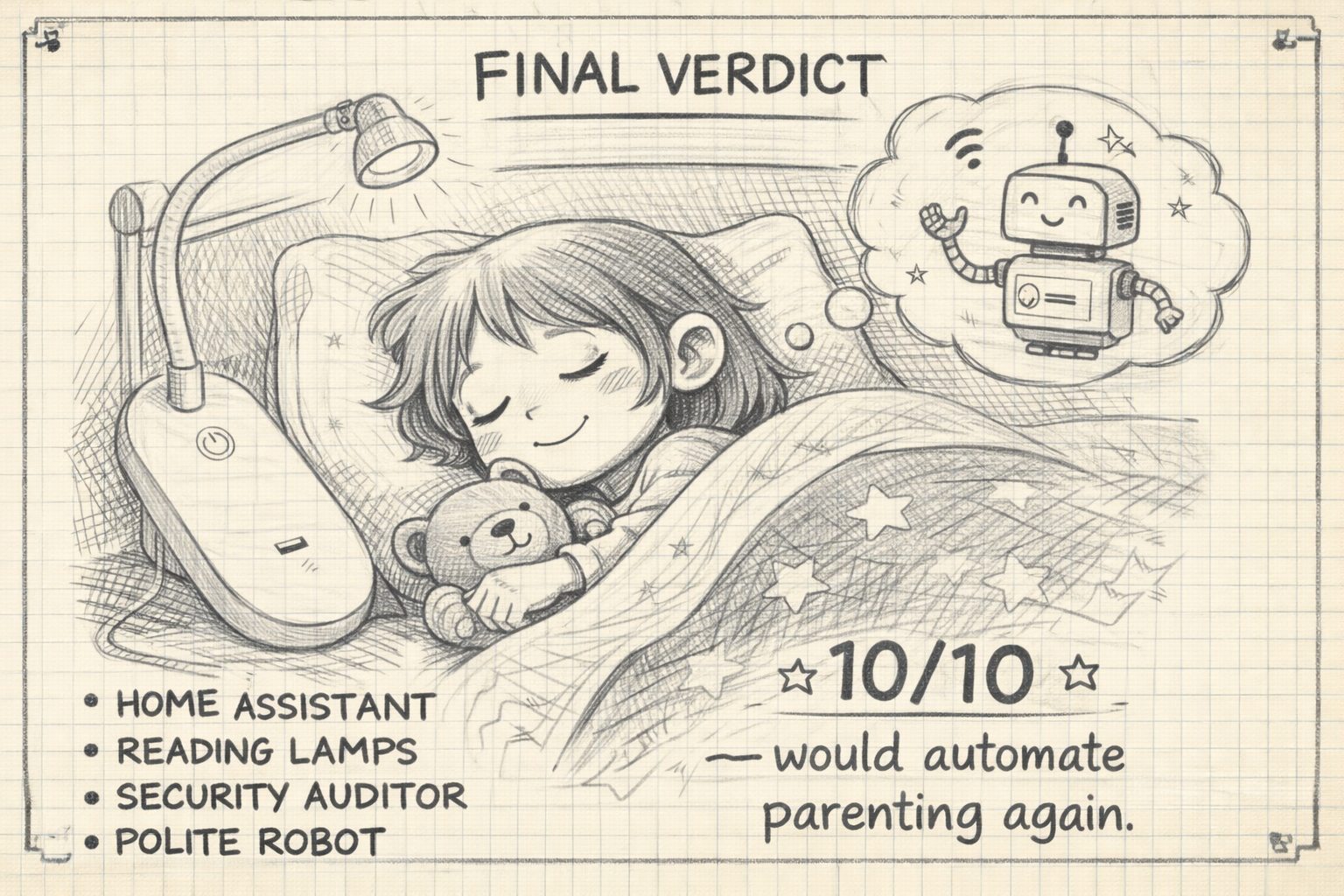
- Home Assistant
- Two reading lamps
- One 10-year-old security auditor
- One honor system
- And one very polite robot
To solve bedtime without yelling.
10/10 — would automate parenting again.
Reactions
Did this resonate?